
Library / Civilizations & Symbols
Great Zimbabwe
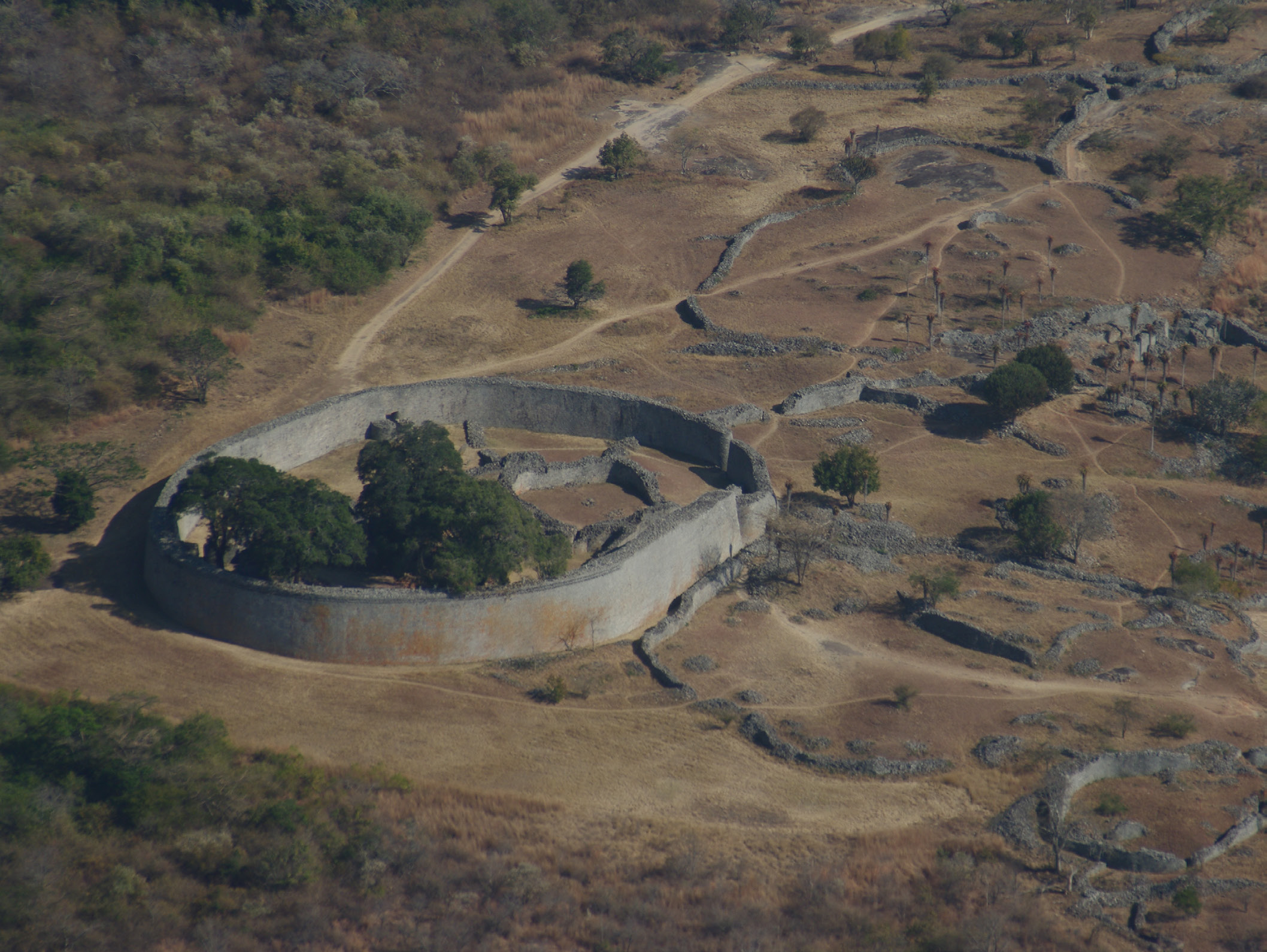
Great Zimbabwe, the medieval stone city in present-day Zimbabwe, gives the country its name and provides Collection 1 with a specific architectural source: its granite walls and the chevron frieze set into the Great Enclosure.
The Source
Great Zimbabwe was built and occupied between approximately 1100 and 1450 AD. The site developed over several centuries and covered nearly 80 hectares. It was the capital of the Kingdom of Zimbabwe and, by the fourteenth century, the principal city of a major state extending across the gold-rich plateaux of southern Africa.
The city was built by an Iron Age population associated with the Shona. Its walls were constructed from granite blocks laid without mortar, with each course of stone supporting the one above it. The Great Enclosure, which dates largely to the fourteenth century, remains the largest pre-colonial structure in sub-Saharan Africa.
Great Zimbabwe was a lived city and a centre of political, domestic, ritual and commercial activity. The Hill Ruins are generally understood as a royal city, with enclosures associated with successive chiefs and ritual use. The Great Enclosure contained living quarters built from daga, a mixture of granitic sand and clay, as well as community areas and a narrow passage leading to a high conical tower. Archaeological evidence also records farming, pastoral activity, metalwork and other forms of production.
The city was connected to long-distance trade networks. Excavations have revealed glass beads and porcelain from China and Persia, as well as gold and Arab coins from Kilwa on the East African coast. These objects place Great Zimbabwe within trading systems that connected the interior of southern Africa to the Indian Ocean world.
Around 1450, Great Zimbabwe was abandoned as the principal capital. UNESCO connects this change to pressure on the surrounding environment, including the difficulty of supplying food to a growing population and the effects of deforestation. Political influence shifted to other centres, including Khami and the Mutapa state.
The name Zimbabwe comes from the Shona phrase dzimba dzemabwe, meaning “houses of stone.” At independence in 1980, the country took its name from the site.
International readers often compare Great Zimbabwe with the pyramids of Egypt because both are monumental stone complexes built through highly organised labour and advanced construction knowledge. Their historical roles were different. The pyramids at Giza belong to Egypt’s Old Kingdom and formed part of royal funerary complexes. Great Zimbabwe was a medieval urban and political centre with residences, ritual spaces, trade, food production and daily life taking place within and around its stone structures.
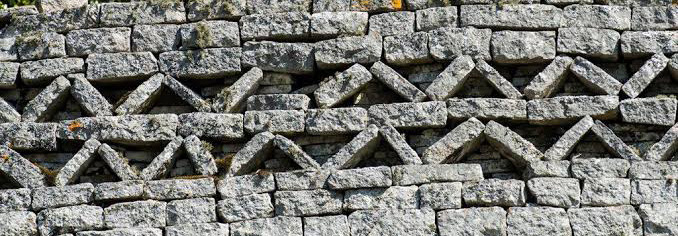
The outer wall of the Great Enclosure carries a chevron frieze set into the stonework. This specific architectural detail became one of the principal sources for the textile design.
The Design
The design combines chevron motifs derived from the Great Enclosure with basket-weave patterns found in Zimbabwean basketry traditions. These elements are arranged as concentric square borders around the Tammarê mark at the centre.
The square structure establishes the order of the composition. The chevron carries the architectural reference, while the basket-weave pattern introduces a second Zimbabwean construction system through textile form. Each border builds on the one before it, creating a surface that can be read from the central mark outward.
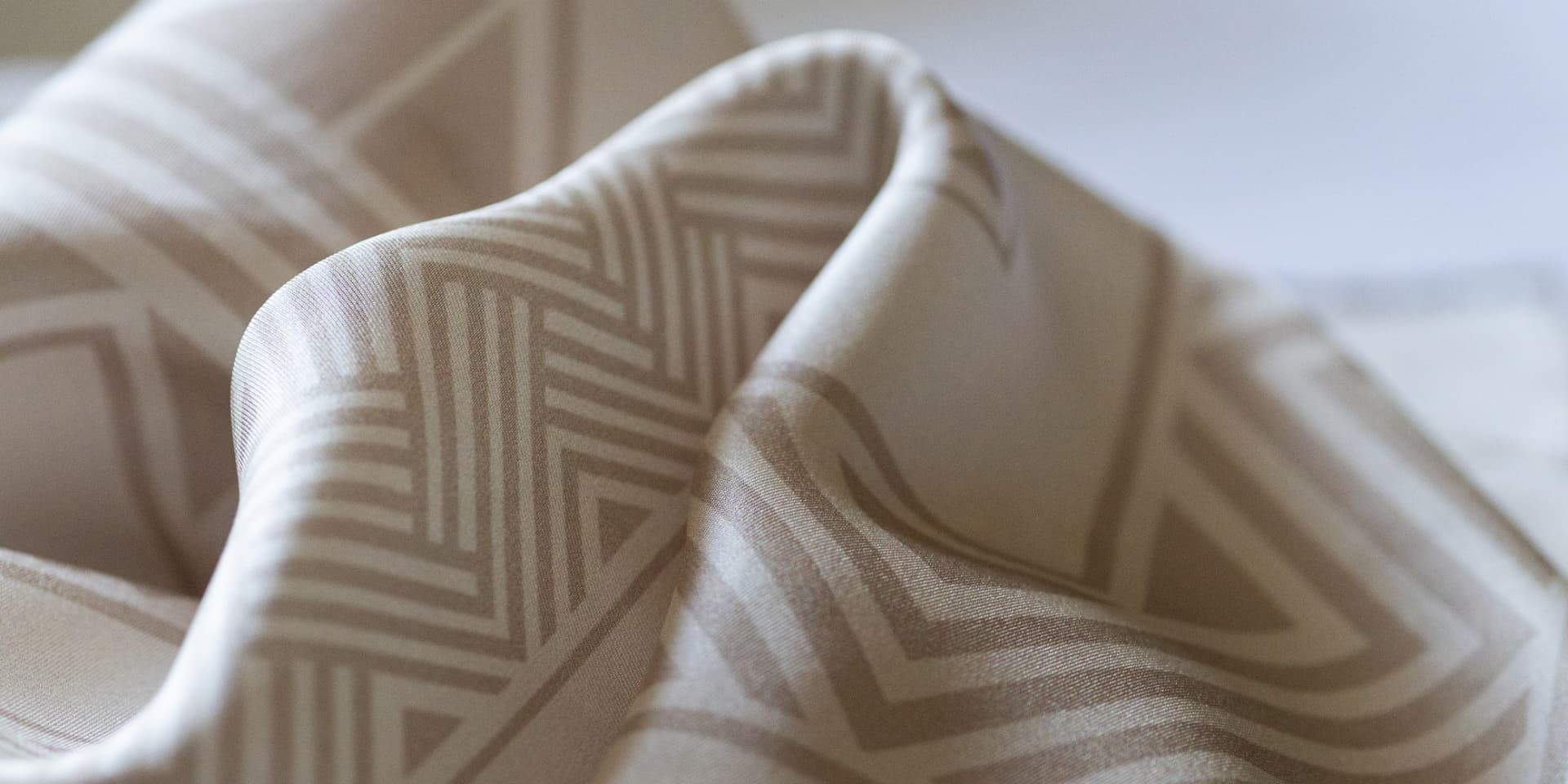
The design was originally developed with weaving in mind. For Collection 1, it is presented as a tone-on-tone print on 100% silk twill. Sand and ivory are kept close in value, allowing the pattern to emerge through the relationship between the printed surface, the texture of the silk and the movement of reflected light.
The current printed version preserves the design’s structural quality while giving the chevron and basket-weave references a clear presence on silk. The pattern becomes visible through close examination, changes in light and the way the scarf folds.
The Current Edition
The Great Zimbabwe scarf in Collection 1 is printed on 100% silk twill and finished with hand-rolled edges. It measures 90 × 90 cm and uses a tone-on-tone colour arrangement of sand on ivory.
The printed scarf is the current object available through the collection. It carries the architectural study into a finished silk accessory while retaining the square borders, chevron motifs and restrained surface contrast developed from the source.
The Development
A woven interpretation remains in development with the mill as a separate material direction. The weaving technique and fibre composition are still being evaluated, including the possibility of a silk blend with wool or cashmere.
That development belongs to the future woven version of the design. The current Collection 1 scarf is the printed silk edition.
The Context
Great Zimbabwe connects a physical site, a national name and a contemporary textile object. The scarf begins with a specific architectural detail and develops it through two Zimbabwean textile references: the chevron frieze of the Great Enclosure and basket-weave structures found in Zimbabwean basketry traditions.
The design keeps those sources visible through its construction. The square borders, close colour values and change in surface appearance allow the scarf to be read as a study of stone, pattern and textile structure.