
Library / Fruits & Foods
Matohwe
Matohwe is the fruit of the mutohwe tree, Azanza garckeana. Its seasonal use as food and the segmented shape of its capsule guide both the illustration and the construction of the objects developed from it.
The Source
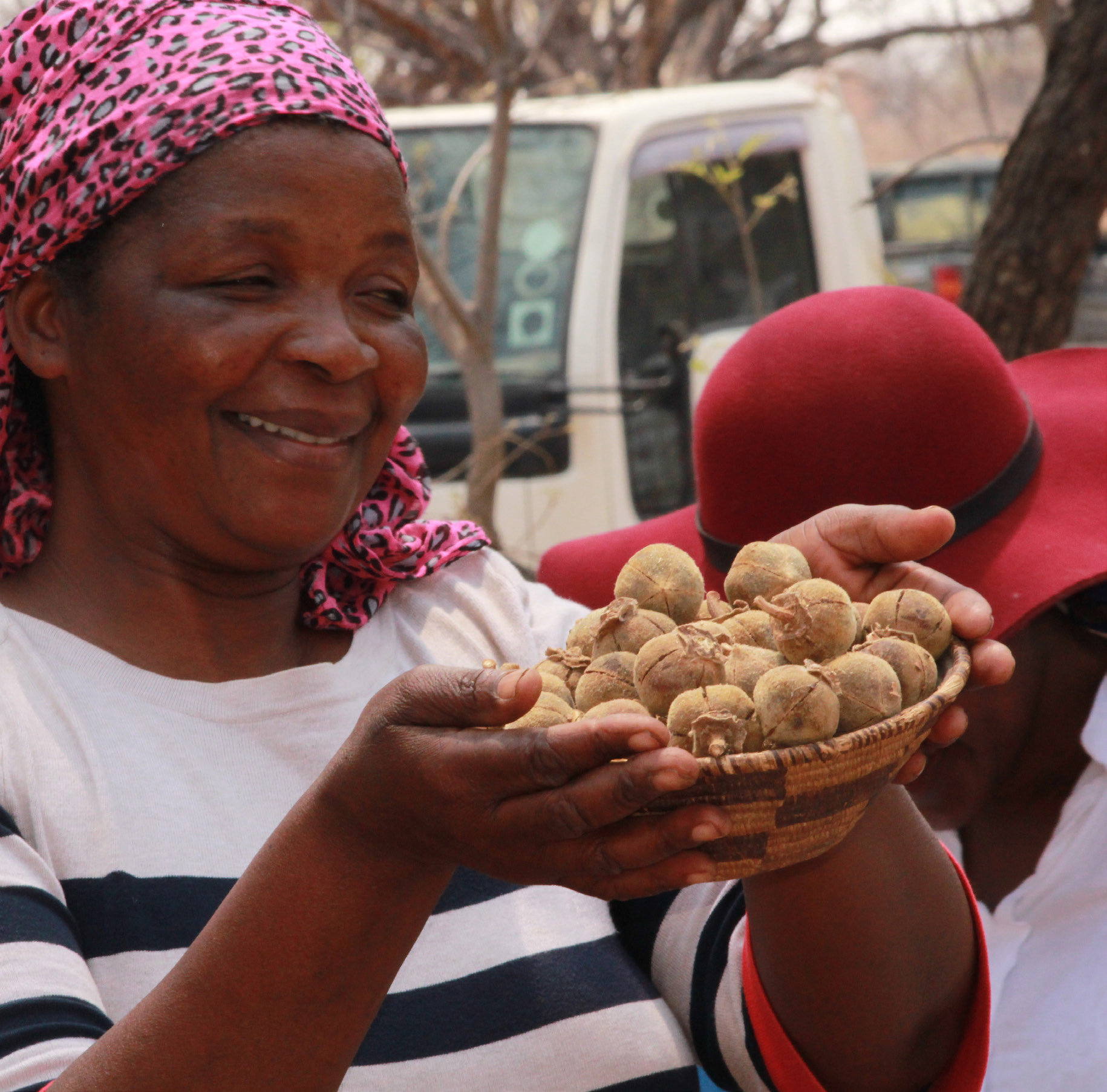
Matohwe are found across Zimbabwe. Many Zimbabweans grew up eating the fruit when it was in season. For a reader encountering the word outside Zimbabwe, matohwe refers to the fruit of the mutohwe tree rather than to a decorative pattern or a general category of wild fruit. It is a source that is known through use: the fruit is gathered, opened and eaten fresh during its season.
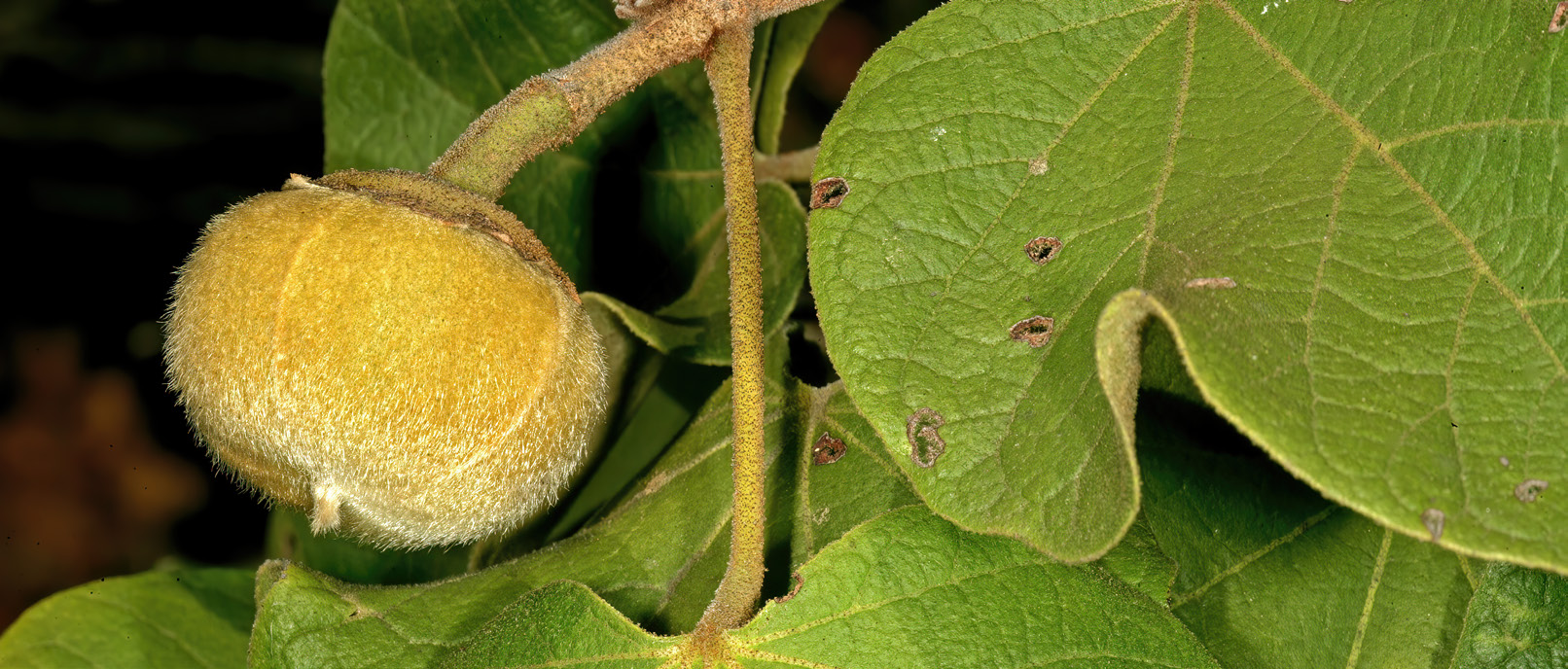
The fruit has a rounded capsule divided into segments. That division is its most direct visual and structural characteristic. It gives the source a clear form that can be observed in stages and then carried into other materials without being reduced to a single outline.
The Design
The scarf follows the plant through a sequence: blossom, young fruit, ripening fruit and the mature split capsule. The sequence makes the change in the plant visible. It also prevents the design from treating matohwe as a fixed icon, because the source is shown as it develops toward the form people recognize and eat.
Bees and moths appear among the branches. They belong to the plant's surrounding world and help the composition remain a study of the whole plant rather than an isolated image of the fruit. The botanical illustration was redrawn as a seamless repeat for the cushions, wallpaper, silk chiffon curtains and silk chiffon dress developed for the installation.
The same drawing is used at different scales across the set. A large-scale application allows the branches and stages of the fruit to be read across a surface; a smaller scale allows the repeat to function on a garment or cushion. The source stays consistent while its use changes with the object.
The Construction
The leather and suede jacket takes its panel construction from the fruit's segmented capsule. Here, the fruit is not only illustrated on a surface. Its internal division becomes a method for cutting and joining material. The panels give the jacket a direct relationship to the source without requiring the fruit to be printed on it.
The jacket is presented alongside the printed textiles, including the silk chiffon dress. Together they show two ways of extending the same botanical study: one through a repeat pattern applied to an interior and a garment, the other through the construction of a leather and suede object.
The Context
The installation brings these applications together in an interior setting. It is a working demonstration of how one Zimbabwean source can move from plant study to print, surface, room and garment. It also introduces directions for a larger Matohwe collection, where the fruit can continue to guide different materials and forms.